When designing outdoor spaces such as patios, balconies, garden walkways, or rooftop terraces, the choice of flooring material plays a critical role. Outdoor surfaces must withstand intense sunlight, rain, temperature fluctuations, and daily wear . For this reason, durability and long-term lifespan are often the most important factors for homeowners when selecting outdoor flooring.
Among the many options available today, WPC decking and outdoor tiles are two of the most commonly considered solutions. Both materials offer distinct advantages, but they differ significantly in structure, installation methods, and long-term performance. This naturally leads to an important question: which option lasts longer in outdoor environments?
WPC decking (Wood Plastic Composite decking) is a type of engineered outdoor flooring made from a mixture of wood fibers and thermoplastic polymers. By combining these materials, manufacturers create a product that offers the natural appearance of wood while improving resistance to moisture, weather, and long-term environmental exposure.
Unlike traditional wood decking, WPC flooring is designed to resist common outdoor problems such as rotting, cracking, and warping . The polymer component helps reduce water absorption, while additives such as UV stabilizers improve resistance to sunlight and weathering.
Another advantage that attracts many homeowners is low maintenance requirements . Natural wood decks often require regular sealing, staining, or repainting. In contrast, most WPC decking systems only need occasional cleaning to maintain their appearance and performance.
Because of these benefits, WPC flooring has become increasingly popular for patios, terraces, pool areas, and garden decks .
Outdoor tiles typically include porcelain tiles, ceramic tiles, or natural stone tiles designed specifically for exterior applications. These materials are known for their high hardness, excellent compressive strength, and wide range of design styles .
One of the major advantages of outdoor tiles is their strong surface durability . In areas with frequent foot traffic, such as commercial terraces or outdoor dining spaces, tile surfaces can maintain their structural integrity for many years.
Outdoor tiles also have strong resistance to water penetration, which makes them suitable for humid environments. However, they are not without limitations. Improper installation or unstable foundations can lead to cracking, loose tiles, or hollow spots over time. In colder climates, freeze–thaw cycles may also cause structural damage.
When comparing WPC decking and outdoor tiles , several factors influence how long the flooring will last in real-world conditions.
1. Weather and Environmental Exposure
Outdoor flooring must constantly deal with UV radiation, rain, humidity, and temperature fluctuations .
Modern WPC decking is engineered with UV stabilizers and moisture-resistant materials that help protect the boards from environmental damage. These features allow WPC flooring to maintain its structural stability and appearance over many years of outdoor exposure.
Outdoor tiles, on the other hand, are highly resistant to water but may become vulnerable in regions with extreme temperature variations. Freeze–thaw cycles can create stress within the material, potentially leading to cracks.
2. Structural Stability and Risk of Cracking
The physical characteristics of each material also affect long-term durability.
WPC decking has a certain degree of flexibility, which allows it to absorb minor movement or pressure without breaking. This flexibility is beneficial for outdoor platforms where slight structural movement may occur.
In contrast, outdoor tiles are extremely hard but also more brittle. If the underlying base shifts or settles over time, the tiles may crack. Repairing cracked tiles can sometimes require replacing entire sections of the floor.
3. Installation Methods and Structural Design
Installation methods play a major role in the lifespan of outdoor flooring.
WPC flooring is usually installed using a joist and clip system. This structure allows proper ventilation beneath the boards and provides space for thermal expansion and contraction. The modular design also makes individual boards easier to replace if needed.
Outdoor tiles, however, are generally installed using cement mortar or adhesive layers. If the substrate becomes unstable or the waterproof layer fails, the tiles may loosen or detach, leading to more complex repairs.
4. Maintenance Requirements Over Time
Maintenance is another factor that indirectly affects how long a flooring system lasts.
WPC decking requires relatively simple maintenance, typically involving periodic cleaning with water or mild detergent. The protective surface layer helps resist stains and dirt buildup.
Outdoor tiles are also relatively easy to clean, but grout lines may require occasional maintenance. Over time, damaged tiles or grout may need repairs to maintain the surface integrity.
Overall, WPC flooring tends to offer a lower long-term maintenance burden for homeowners.
Under proper installation and normal usage conditions, both materials can provide many years of service. However, their long-term performance differs slightly.
| Comparison Factor | WPC Decking | Outdoor Tiles |
| Typical Lifespan | 20–30 years | 15–25 years |
| Crack Resistance | Good | Moderate |
| Maintenance Level | Low | Medium |
| Installation Flexibility | High | Lower |
From this comparison, WPC decking often performs better in terms of crack resistance and ease of maintenance, which can contribute to a longer overall service life.
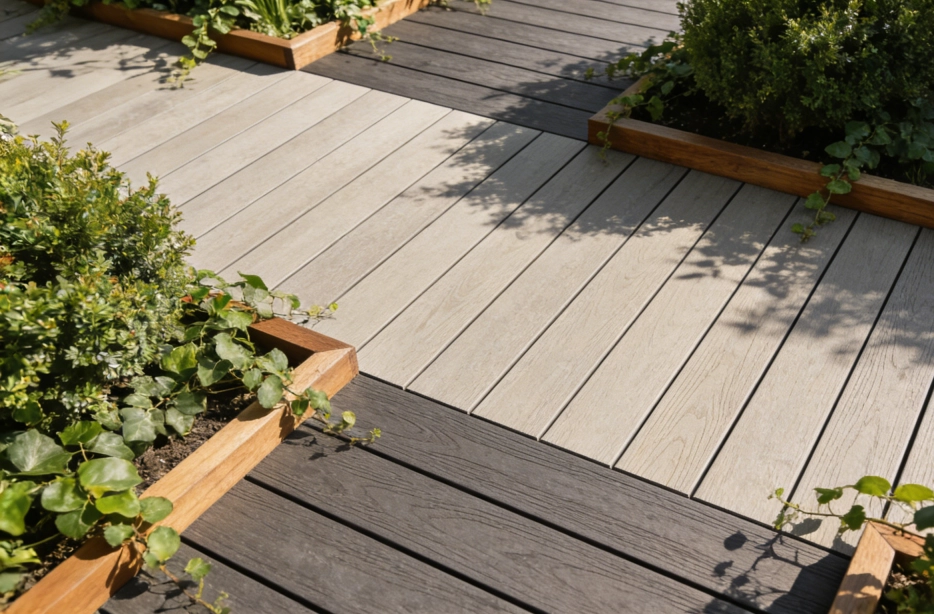
As outdoor living spaces become more popular, architects and homeowners are increasingly turning to engineered outdoor flooring materials that combine durability with visual appeal.
Modern co-extrusion WPC decking technology adds a protective outer layer to the composite core, improving resistance to stains, fading, and surface wear. This technology allows WPC flooring to maintain both its appearance and structural performance for extended periods.
For example, YT-C series co-extrusion WPC flooring uses a protective outer layer combined with a durable composite core. This structure enhances weather resistance while preserving a natural wood-like texture. As a result, such products are widely used in residential patios, garden decks, commercial terraces, and public outdoor spaces.
Both WPC decking and outdoor tiles can serve as reliable solutions for outdoor flooring. However, they differ significantly in how they respond to environmental stress, structural movement, and long-term maintenance needs.
Outdoor tiles offer high hardness and strong wear resistance, but they can be vulnerable to cracking if the base shifts or temperature conditions are extreme. WPC flooring, thanks to its composite structure and flexible installation system, typically provides greater long-term stability and lower maintenance requirements.
For homeowners seeking durable, low-maintenance, and visually appealing outdoor flooring, WPC decking is often considered a practical and long-lasting choice.