An outdoor deck is more than a floor. It sets the tone for how a space is used, whether that's a quiet morning coffee, a poolside party or a hotel guest's first step onto a terrace. Wood-plastic composite (WPC) has become a popular choice for these spaces because it gives you the warmth of timber with far fewer worries about rot, splinters and constant upkeep. The design possibilities are wide. Here are some of the ideas that work best, organized by setting.
Coastal properties face salt air, strong sun and frequent moisture, so the deck has to look relaxed and still hold up. Designers often choose soft, sun-washed tones such as light grey, sandy beige and weathered brown. These colors echo the shoreline and hide sand and dust well.
Long, uninterrupted boards laid parallel to the sea create a sense of length and direction, drawing the eye toward the horizon. Wide walkways from the hotel building to the beach feel generous when the boards run in one continuous line, and a slightly wider board gives the surface a calm, modern look.
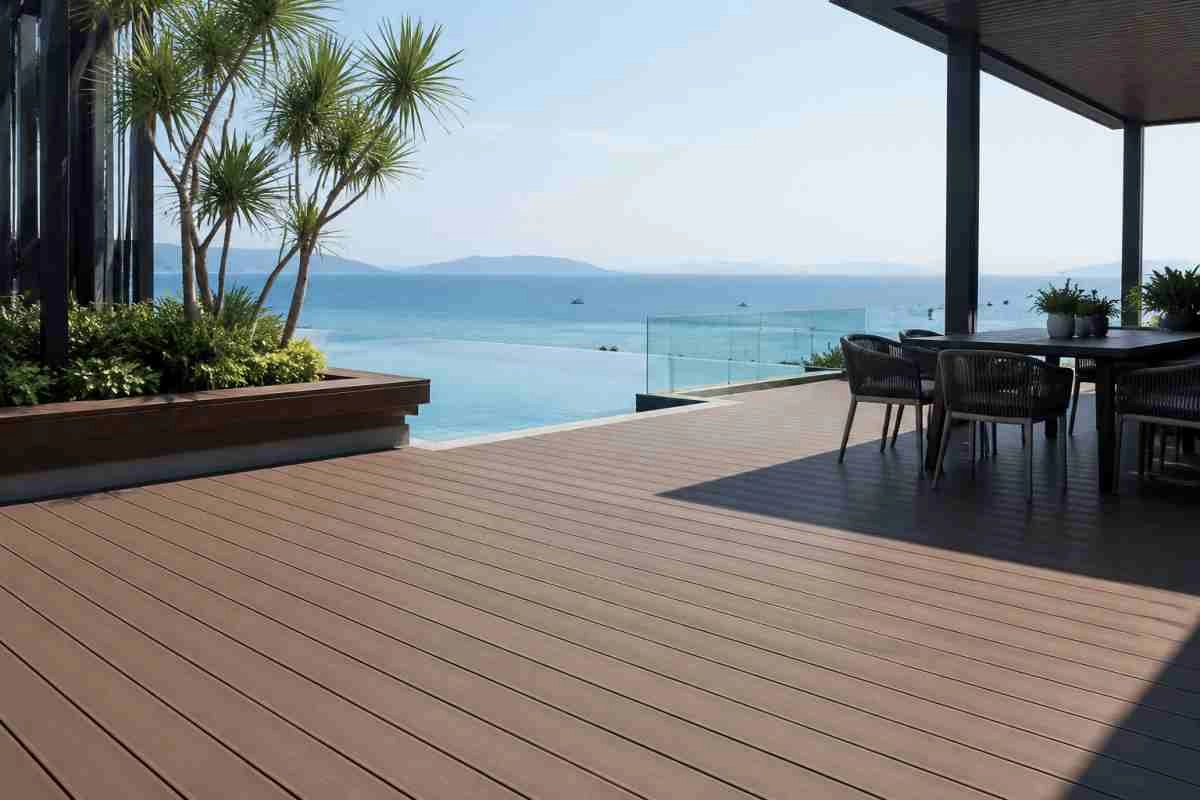
Suggested pairing: YT-A140H25 WPC Decking Floor or YT-A140H25G WPC Composite Decking, for a balanced 140 mm board profile that suits large hospitality areas.
Around a pool, the deck has to feel good on bare feet and look clean when wet. Mid-tone colors such as warm honey, teak-inspired brown and soft charcoal work well. They avoid the glare of very light surfaces and don't show every water mark.
For layout, consider a border of boards running around the pool edge, framing the water like a picture. Inside the border, boards can run in the opposite direction to define lounging zones. For a more polished look, use matching edge trims so the sides of the deck are neatly finished.

Suggested pairing: YT-A140H23 Outdoor WPC Floor Panels or YT-A140H24A Outdoor WPC Panels , whose slimmer profiles suit pool surrounds and stepped edges.
In a garden, the deck should feel like part of the landscape rather than something placed on top of it. Earthy browns, deep coffee and natural wood-like tones sit comfortably next to lawns, planting beds and stone paths.
Curved or staggered deck platforms feel more organic than one large rectangle. Small "islands" of decking connected by gravel or stepping stones make a garden more interesting to walk through. Built-in planters, low benches or a pergola over one corner turn a simple platform into a proper outdoor room.
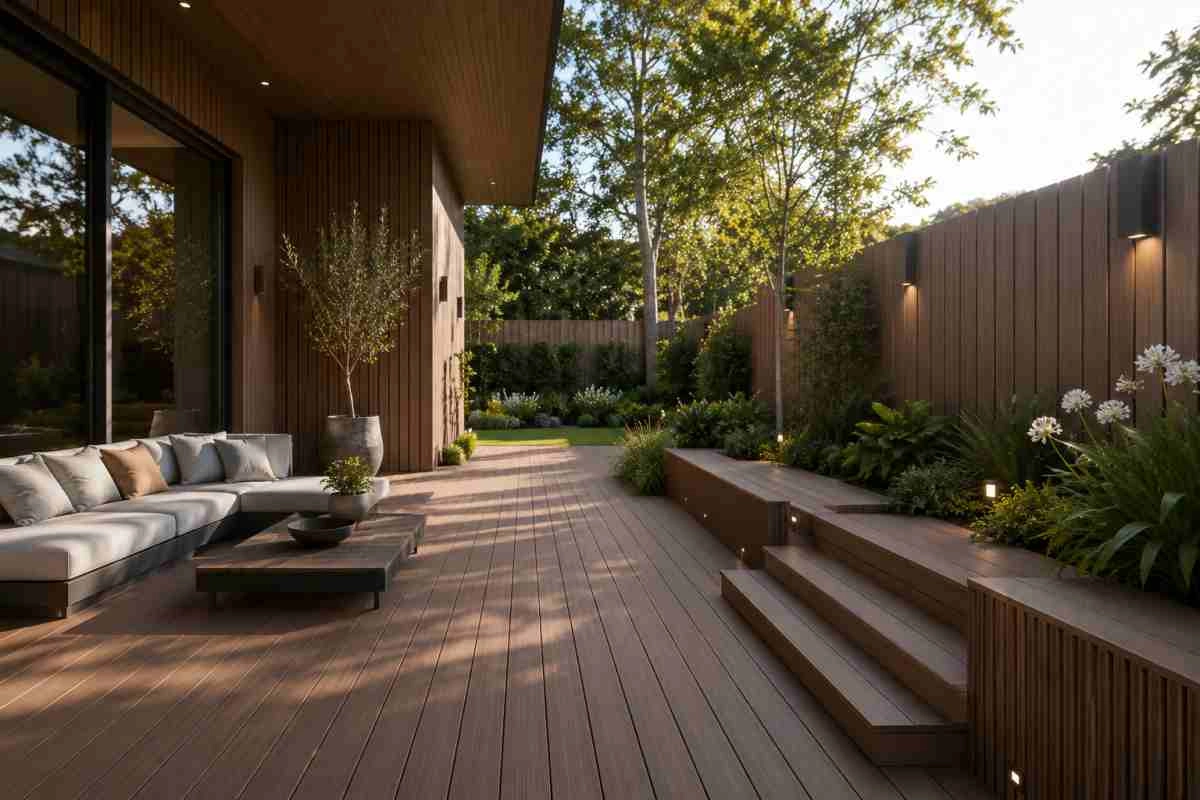
Suggested pairing: YT-A135H26 WPC Outdoor Decking , a good match for residential gardens and smaller custom shapes.
On rooftops and balconies, every square meter counts. Lighter shades make a compact area feel more open, while boards laid diagonally can visually widen a narrow balcony. Keep furniture simple and low so the deck stays the main visual feature.
For rooftop terraces, weight and stability matter as well. A well-designed sub-frame with proper drainage gaps keeps the surface even and comfortable, whatever the season.
Suggested pairing: YT-A145H20 WPC Deck Tiles or YT-A145H20A WPC Floor Decking , for a lighter build suited to balconies and roof terraces.
Beyond location, a few design strategies can lift almost any WPC deck.
Switching board direction between zones, such as a walkway and a seating area, adds structure without extra materials. Herringbone and picture-frame borders bring a more tailored feel to entertaining areas.
Pairing a main color with a slightly darker accent for borders, steps or stair risers adds depth and defines edges clearly, which is also good for safety.
Low-level LED strips along steps, under bench edges or beside pathways make an evening deck feel welcoming and add safety without harsh glare.
Hidden clips create a clean, screw-free surface, and matching end caps and edge trims finish exposed sides so the whole deck looks cohesive. These small items make the difference between a deck that looks installed and one that looks designed.
Even a single step up or down can separate a dining zone from a lounge area, adding character to an otherwise flat space.
A great layout only works if the material behaves. WPC boards that combine recycled HDPE with natural wood fiber offer good resistance to rot, warping and insect damage. They stay stable through temperature swings and need little more than an occasional wash. That reliability means designers can focus on creativity, such as curves, patterns and mixed colors, without worrying about ongoing sealing or restaining.
The best decking design starts with how the space will be used. A resort terrace needs openness and durability, a pool deck needs comfort and grip, a garden needs a natural feel, and a balcony needs clever use of space. When color, layout and detailing all serve that purpose, the deck becomes a place people want to stay. WPC gives you a dependable base, and your ideas do the rest.