WPC wall panels have become increasingly popular in interior wall decoration because they combine the visual appeal of wood with the practical characteristics of polymer-based materials. But what happens during the manufacturing process that turns wood-based materials and polymers into a finished wall panel?
Understanding how WPC wall panels are made can help distributors, contractors, interior designers, and project buyers evaluate product quality more effectively. The manufacturing process influences the panel's appearance, dimensional stability, surface quality, and long-term performance.
Although formulations and production methods vary between manufacturers, most wood plastic composite wall panels follow several key manufacturing stages.
The basic material system of a WPC wall panel typically combines wood-based components with thermoplastic polymers and selected additives.
Wood fiber or wood flour provides the natural appearance and contributes to the material's overall structure. Thermoplastic polymers act as the binding matrix, allowing the mixture to be processed into a stable profile or panel.
Manufacturers may also use additives to improve processing, color consistency, weathering performance, surface characteristics, or other properties required by the intended application.
The exact formulation matters. Two products may both be marketed as WPC panels while having different material ratios, polymer types, additives, and manufacturing processes. These differences can affect the final product considerably.
The production of WPC wall panels generally involves material preparation, mixing, extrusion or molding, cooling, sizing, surface treatment, and quality inspection.
Before production begins, the wood-based material needs to meet appropriate requirements for particle size and moisture content.
Excessive moisture can create processing problems and may contribute to surface defects or dimensional instability. For this reason, controlling the condition of the raw materials is an important part of manufacturing.
The polymer component and additives also need to be prepared according to the selected formulation.
For a professional WPC wall panel manufacturer, consistent raw material preparation is one of the foundations of batch-to-batch product consistency.
The prepared wood component, polymer, and additives are carefully combined to create a relatively uniform compound.
This stage is more important than it may appear. Uneven distribution of wood particles, polymer, or additives can result in differences in surface appearance and mechanical properties.
Temperature, mixing time, material ratios, and processing conditions all need to be controlled according to the formulation.
A well-controlled compounding process helps create a more consistent material before it enters the forming stage.
For many WPC wall cladding products, extrusion is a key manufacturing process.
The compounded material is heated until the polymer becomes processable and is then pushed through a specially designed die. The die determines the basic cross-sectional shape and dimensions of the WPC profile.
For decorative wall panels, the design of the die is particularly important because it influences details such as grooves, ribs, cavities, and overall geometry.
The extrusion process needs to maintain stable temperature, pressure, and material flow. Poor control can lead to dimensional variation, uneven surfaces, or deformation.
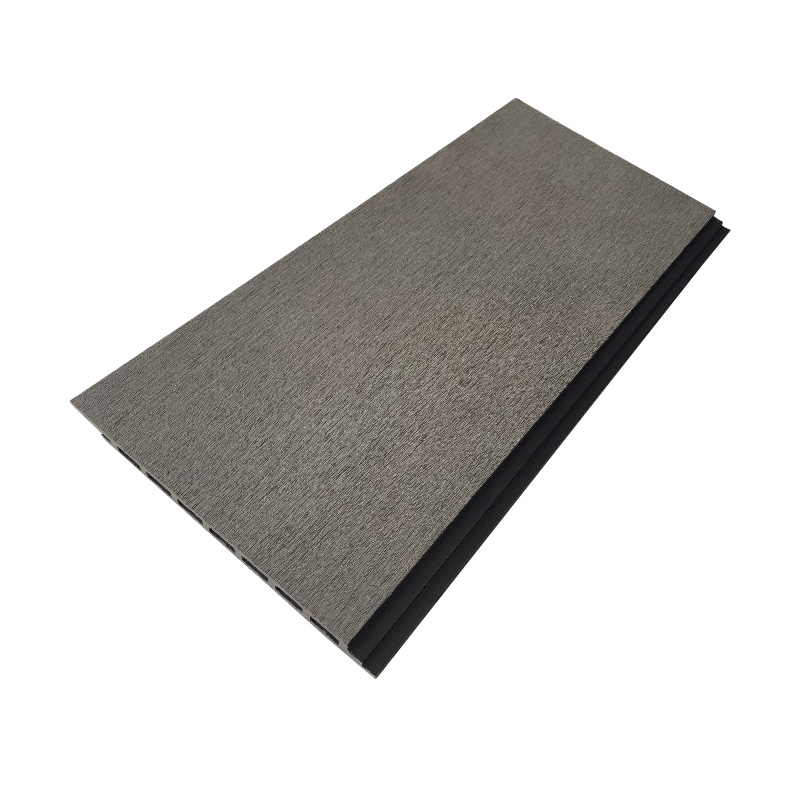
After the basic WPC profile has been formed, additional surface processing may be applied depending on the product design.
Surface treatment can create different visual effects, including wood-grain textures, matte finishes, embossed patterns, or other decorative appearances.
This is one of the areas where manufacturers can differentiate their WPC wall panels. A well-designed surface should not only look attractive but also remain consistent across production batches.
Color formulation is equally important. Modern WPC wall panels are available in various wood tones, neutral shades, and contemporary colors, allowing them to work with different interior design styles.
For large commercial projects, consistency between batches is particularly important because panels from different production runs may be installed within the same visual area.
After extrusion, the hot WPC profile needs to be cooled and stabilized.
Controlled cooling helps the material maintain its intended dimensions and shape. The profile may then pass through sizing equipment or other calibration processes to achieve the required dimensional accuracy.
Installation impact: This stage is particularly important for interlocking or grooved WPC wall panels. If the dimensions are inconsistent, installation can become more difficult and the finished wall may not have the desired appearance.
For contractors and project buyers, dimensional consistency is therefore more than a manufacturing specification—it directly affects installation efficiency.
Quality control should take place throughout the manufacturing process rather than only at the end.
A professional manufacturer may inspect raw materials, monitor processing parameters, and check finished panels for dimensions, surface consistency, color, structural integrity, and other specifications relevant to the product.
Important quality considerations can include:
For B2B buyers, asking a supplier about its quality control procedures can provide more useful information than simply comparing product prices.
Technical specifications and product samples should also be reviewed before a large order, especially when the panels are intended for commercial or customized projects.
Yes. The manufacturing process has a direct relationship with the consistency and performance of the finished product.
For example, poor raw material preparation can affect processing stability. Inconsistent mixing can influence material uniformity, while unstable extrusion conditions can result in dimensional variation.
Surface treatment also matters because the visible finish is one of the most important characteristics of a decorative wall panel.
This means that the term WPC wall panel alone does not guarantee identical performance between products. Material formulation, equipment, production control, surface technology, and inspection standards all contribute to the final result.
For distributors, contractors, and importers, evaluating the manufacturer is just as important as evaluating the product itself.
A reliable WPC wall panel supplier should be able to explain its material composition, manufacturing process, product specifications, quality control procedures, and customization capabilities.
If you are purchasing for a large project, consider requesting samples before placing a bulk order. Compare the samples for the following:
It is also useful to confirm production capacity and whether the supplier can maintain consistent specifications across repeated orders.
A manufacturer with stable production processes can provide greater confidence when the same WPC wall panel needs to be supplied for multiple projects.
The manufacturing process allows WPC to combine wood-based aesthetics with the processing advantages of thermoplastic materials.
This makes wood plastic composite wall panels suitable for a variety of decorative applications where designers want a warm, textured appearance without relying exclusively on traditional solid wood.
Depending on the specific formulation and product design, WPC wall panels can offer practical advantages such as relatively easy installation, low maintenance requirements, and good dimensional stability.
For the following environments, the combination of appearance and practical performance makes WPC wall cladding an increasingly attractive option:
So, how are WPC wall panels made?
The process typically begins with carefully prepared wood-based materials, polymers, and additives. These components are mixed and compounded before being formed through extrusion or another suitable process. Controlled cooling, sizing, surface treatment, and quality inspection then transform the material into a finished decorative wall panel.
However, the quality of a WPC wall panel depends on much more than its basic ingredients. Material formulation, manufacturing control, extrusion accuracy, surface technology, and quality inspection all influence the final product.
For buyers, choosing a supplier with consistent manufacturing capabilities is therefore essential. When evaluating WPC wall panels, look beyond appearance and price. Ask about materials, specifications, production processes, testing, samples, and quality control.
A well-manufactured WPC wall panel can provide the combination of decorative appeal and practical performance that modern interior projects increasingly require.